


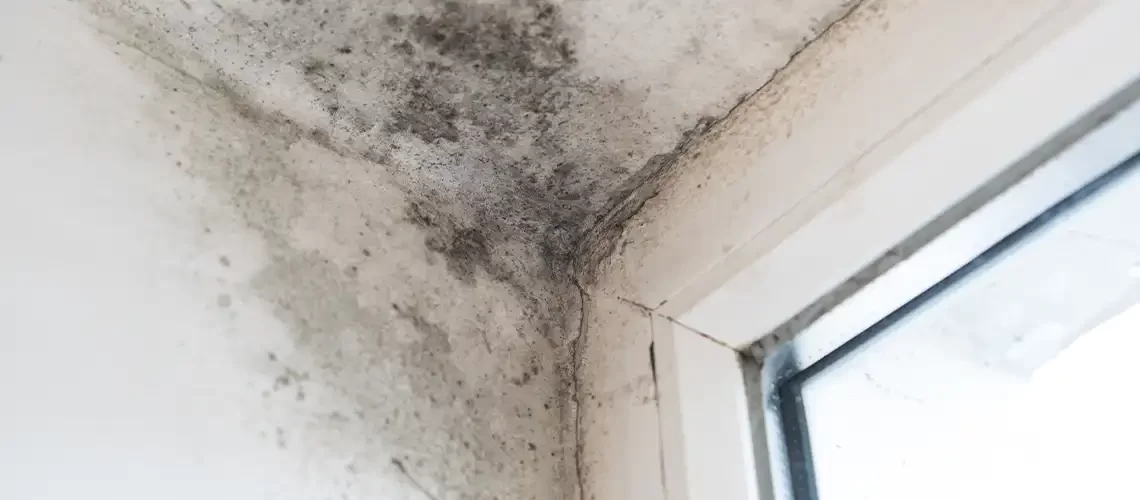
Why does mould keep coming back after cleaning?
Mould thrives when the environment allows it, not because the cleaning wasn’t “thorough enough.” In Singapore, average indoor humidity hovers around 80 %, well above the 60 % threshold where mould begins to grow. According to NEA ventilation guidelines, excess moisture from air conditioning, showers, or drying laundry indoors creates micro-climates that spores love. When you wipe mould away, you remove only the visible colony, leaving behind the microscopic roots and the moisture that fuels them【straitstimes.com】【mdpi.com】.
Surface cleaning also redistributes spores. Scrubbing without containment scatters them into the air, where they land on new surfaces—walls, ceilings, even clothing. That’s why mould in one bathroom often reappears in another. Until humidity is managed and hidden reservoirs are treated, recurrence is inevitable.
Where does invisible mould hide in Singapore homes?
Invisible mould grows where air is still, surfaces are damp, and light is scarce. Common culprits include wardrobes, air-conditioning ducts, and behind built-in cabinets. In HDB flats, these enclosed spaces trap humid air; studies have recorded wardrobe humidity as high as 84 %, making them perfect incubators for fungal growth【tse7en.com】.
Condensation inside AC coils and ductwork can host colonies that spread through vents each time the unit runs. Even seemingly dry walls may conceal mould behind wallpaper or gypsum board, feeding on cellulose adhesives. Because spores are microscopic, you won’t always smell or see them—but they’re active, releasing particles that compromise indoor air quality.
What’s the right way to tackle mould at its source?
True indoor mould removal begins with identifying why it formed. This is where moisture mapping and humidity monitoring come in. Professionals use sensors and infrared tools to locate hidden dampness before remediation starts. Once the root moisture source is addressed—whether a leak, condensation, or trapped humidity—physical removal can follow.
Safe mould remediationinvolves containment, HEPA-filtered extraction, and eco-friendly biocides or hydrogen-peroxide-based cleaners. Surfaces must be fully dried and, where possible, sealed with anti-mould coating to prevent regrowth. The NEA’s ventilation guidelines emphasize improving airflow and maintaining RH below 60 %—the threshold proven to halt new spore development. When done properly, cleaning is just the final step of a biological reset.
How can homeowners stop hidden mould from returning?
Long-term prevention depends on moisture control and routine maintenance. Start with dehumidifiers in bedrooms and enclosed kitchens, especially during rainy seasons. Regularly service air conditioners to clean coils and drainage lines, where moisture often hides. Keep wardrobes slightly ventilated, and avoid pressing furniture flush against walls to let air circulate.
For bathrooms and kitchens, use anti-mould coatings and choose materials that resist organic buildup. Ventilate after showers, and consider a HEPA air purifier to capture airborne spores. Most importantly, make mould prevention part of your sustainable home maintenance—the small daily habits that preserve both your health and your home’s structure.
How The Better Guys Singapore solves indoor mould problems for good
At The Better Guys Singapore, we treat mould removal as a matter of biology and building science, not just cleaning. Our specialists begin with a root-cause assessment, using moisture mapping and airflow diagnostics to pinpoint hidden growth zones in HDB flats, condos, and landed homes. We use eco-friendly mould treatments that neutralize spores without harsh chemicals, and we align every procedure with NEA indoor air guidelines for safety and sustainability.
